Gazelle is a feature film about asylum, exile and family separation, made by filmmakers who lived it. Universities, research centers and nonprofits bring it in to open a conversation on migration, human rights and the psychological cost of waiting, with the filmmakers taking part.
More than 15,524 seats have been filled or sold across North America and Europe, and most screenings end with a conversation with the filmmakers.
Universities
Columbia UniversityDepartment of Sociology and Middle Eastern Studies. With Nadir Sarıbacak and co-writer Ayhan Hulagu. New York, November 12, 2026
Columbia Law SchoolHuman Rights Institute. With Nadir Sarıbacak and assistant director Büşra Çoduroğlu. New York, October 19, 2026
Hofstra UniversityHofstra Cultural Center and the Department of Sociology, Criminology, and Anthropology. Nadir Sarıbacak and Ayhan Hulagu in conversation with Professor Hafza Girdap. Hempstead, New York, October 14, 2026
Black Mountain Institute, UNLVBMI Live. Nadir Sarıbacak in conversation with BMI Fellow Maryam Ala Amjadi, moderated by Hüseyin Arıkan. Las Vegas, June 2, 2026. Sold out
Scholars and clinicians in the conversation
Dr. Jeffrey PragerSociologist who taught at UCLA for 40 years, and psychoanalyst at the New Center for Psychoanalysis. His book Presenting the Past was one of the inspirations behind the film. In conversation with Nadir Sarıbacak, Los Angeles, October 28, 2026
Dr. Sonalee JoshiClinical psychologist. Moderated the conversation in Washington, D.C., April 18, 2026
Community organizations
The Independent Picture HouseCommunity Impact Film Series on immigration, with a resource fair for local immigrant organizations. Panel with Héctor Vaca Cruz of Action NC and Gloria Zavaleta. Charlotte, July 11, 2026
Three ways to bring it
Screening and conversation
A public screening followed by a moderated discussion with co-director Nadir Sarıbacak, often joined by co-writer Ayhan Hulagu. A faculty member or local expert often moderates. Co-presented with departments, centers or student groups.
Online conversation
The film screens on your campus and the filmmakers join the discussion live from wherever they are. This is how The Independent Picture House in Charlotte did it.
Classroom screening
A screening for a course or seminar, paired with our guide for classrooms: themes, discussion questions and readings. The filmmakers can visit the class, in person or online, when schedules allow.
What it brings to a campus
“It’s not a film that’s preaching. It’s teaching.”
Daniel Kothenschulte, film critic, Frankfurter Rundschau, at the Cologne Q&A
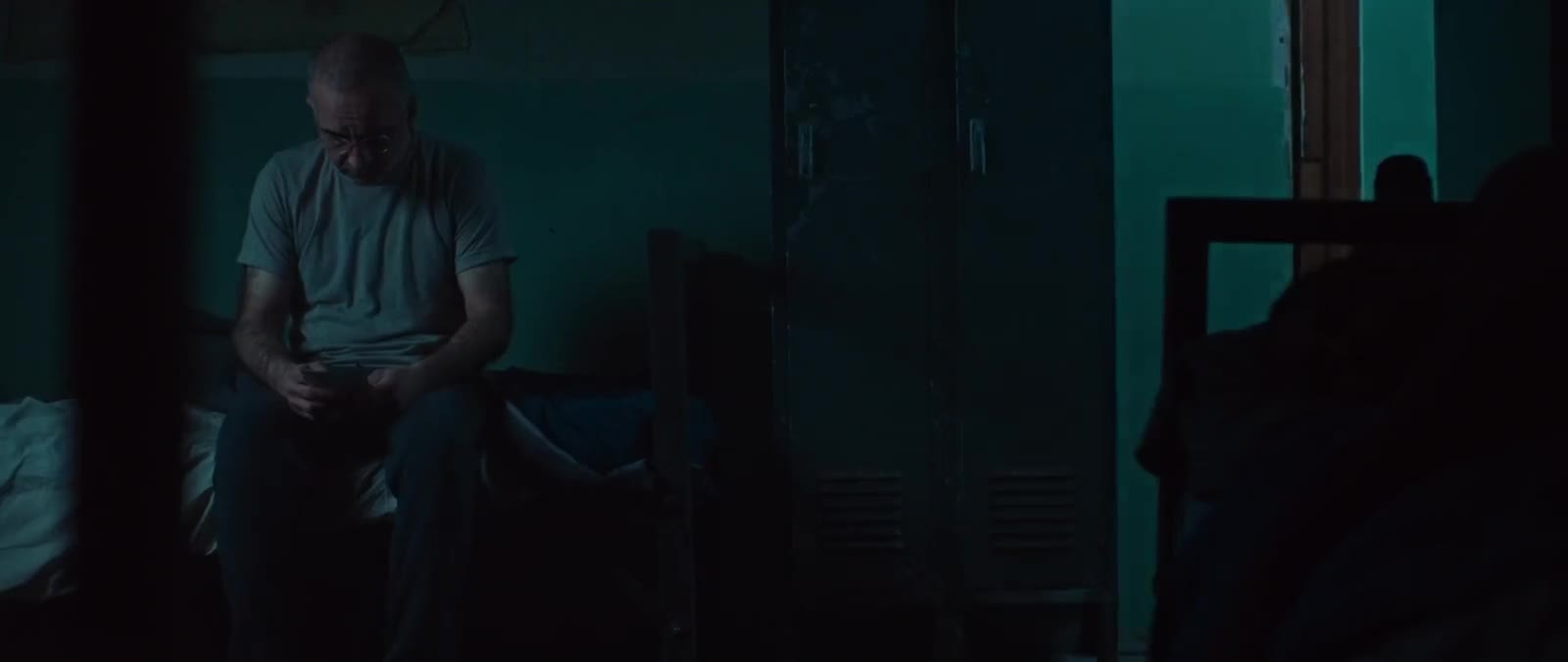
Yakup, a Turkish music teacher, seeks asylum in New York after political upheaval forces him to leave his country. Separated from his wife and daughter, he must choose between waiting years for legal family reunification and risking illegal routes to bring them to safety. The film stays inside his experience of that wait, and that is what makes it useful in a seminar room: it turns questions usually met as policy or data into something an audience lives through for a hundred minutes.
Migration studies and sociologyUncertain legal status, waiting as a social condition, family reunification, and the networks that help or fail new arrivals.
Psychology and social workHow prolonged uncertainty and separation reshape time, relationships and mental health, what psychoanalyst Jeffrey Prager called the “dissolution of a personality,” and what care looks like for someone in that position.
Law, human rights and policyAsylum and family reunification seen from the inside, and the gap between what is legal and what feels right.
Film and media studiesExilic and diasporic cinema: a film written and directed by people telling a version of their own story.
Political science and historyPolitical exile and authoritarianism, and how upheaval in one country reaches a single life in another.
Nonprofits and service organizationsA shared starting point for volunteers, caseworkers, donors and the communities they serve.
Read alongside it
Books and articles on waiting, uncertain status and exile that pair well with the film.
Jeffrey PragerPresenting the Past: Psychoanalysis and the Sociology of Misremembering, Harvard University Press, 1998. One of the books the filmmakers drew on; Prager joined the Los Angeles conversation in October 2026.
Cecilia Menjívar“Liminal Legality,” American Journal of Sociology, 2006
Ghassan Hage, ed.Waiting, Melbourne University Publishing, 2009
Javier AuyeroPatients of the State: The Politics of Waiting in Argentina, Duke University Press, 2012
Hamid NaficyAn Accented Cinema: Exilic and Diasporic Filmmaking, Princeton University Press, 2001
Edward W. Said“Reflections on Exile,” in Reflections on Exile and Other Essays, Harvard University Press, 2000
The guide for classrooms explains each pairing and adds discussion questions for every field above, plus a citation for your syllabus.
From the field
“What I think this movie so powerfully demonstrates is the emotional pain that individuals experience around separation. I think in some ways it has been underestimated … What we see in this character is the dissolution of a personality.”
Dr. Jeffrey Prager, sociologist and psychoanalyst, New Center for Psychoanalysis, at the Los Angeles Q&A
“It has never been so quiet in a cinema as at the end of this film.”
Prof. Antje Missbach, Professor of Sociology, Migration and Mobility, Bielefeld University, after the Paderborn screening (translated from German)
“The trauma isn’t over. We can talk about post-traumatic stress disorder; that’s not what this is. This is a very real, ongoing, traumatic situation. And when you’re in that, you’re responding with whatever you have.”
Dr. Sonalee Joshi, clinical psychologist, at the Washington, D.C. Q&A
“The film moved and impressed me deeply. … It is a very valuable document of the psychological effects of flight and displacement, above all of life in exile. It also makes very clear why exile is often not the ‘safe place,’ but has an additional traumatizing effect.”
Ulrike Maria Schneck, psychologist, Board and Clinical Director, Refugio Stuttgart, center for traumatized refugees, after the Stuttgart screening (translated from German)
“The true measure of a refugee solution is when someone no longer feels like a stranger. Gazelle captures that journey with remarkable honesty.”
Mark Hetfield, Georgetown University Institute for the Study of International Migration, after the Washington, D.C. screening
“Films like yours are invaluable for this work: they create empathy where statistics often remain cold, and they show the universal human perspective behind every migration story.”
Daniela Eneh, Migrant Advisory Council, City of Freiburg, after the Freiburg screening (translated from German)
“Gazelle is a haunting, devastating account of immigration in 21st century America. It’s a gorgeous film, simultaneously moving, heartbreaking, and uplifting. Every American should see it!”
Prof. Kathy M. Newman, Literary and Cultural Studies, Carnegie Mellon University, after the Pittsburgh screening
“It’s a film that would actually be good for school, for politics and history classes. There are many people who should see it, people who are critical of migration, so they can better understand this suffering.”
Bastian, a politics and history teacher, after the Berlin screening (translated from German)
More from the field
“What a deeply touching and important and beautifully done film. I cried.”
Deborah Lynn, MD, Clinical Instructor, UCLA Department of Psychiatry and Biobehavioral Sciences, after the Los Angeles screening
Request a screening
Tell us a little about your plans. We will write back to shape the date, the format and the conversation with you.
 Skip to content